Market Insight
Dubai Metro Blue Line: How the 2029 Launch Is Already Moving Property Prices
By Dhananjay Arora · CEO & Founder, Al Ranim Properties
Published 30 May 2026 · Updated 27 June 2026 · 8 min read
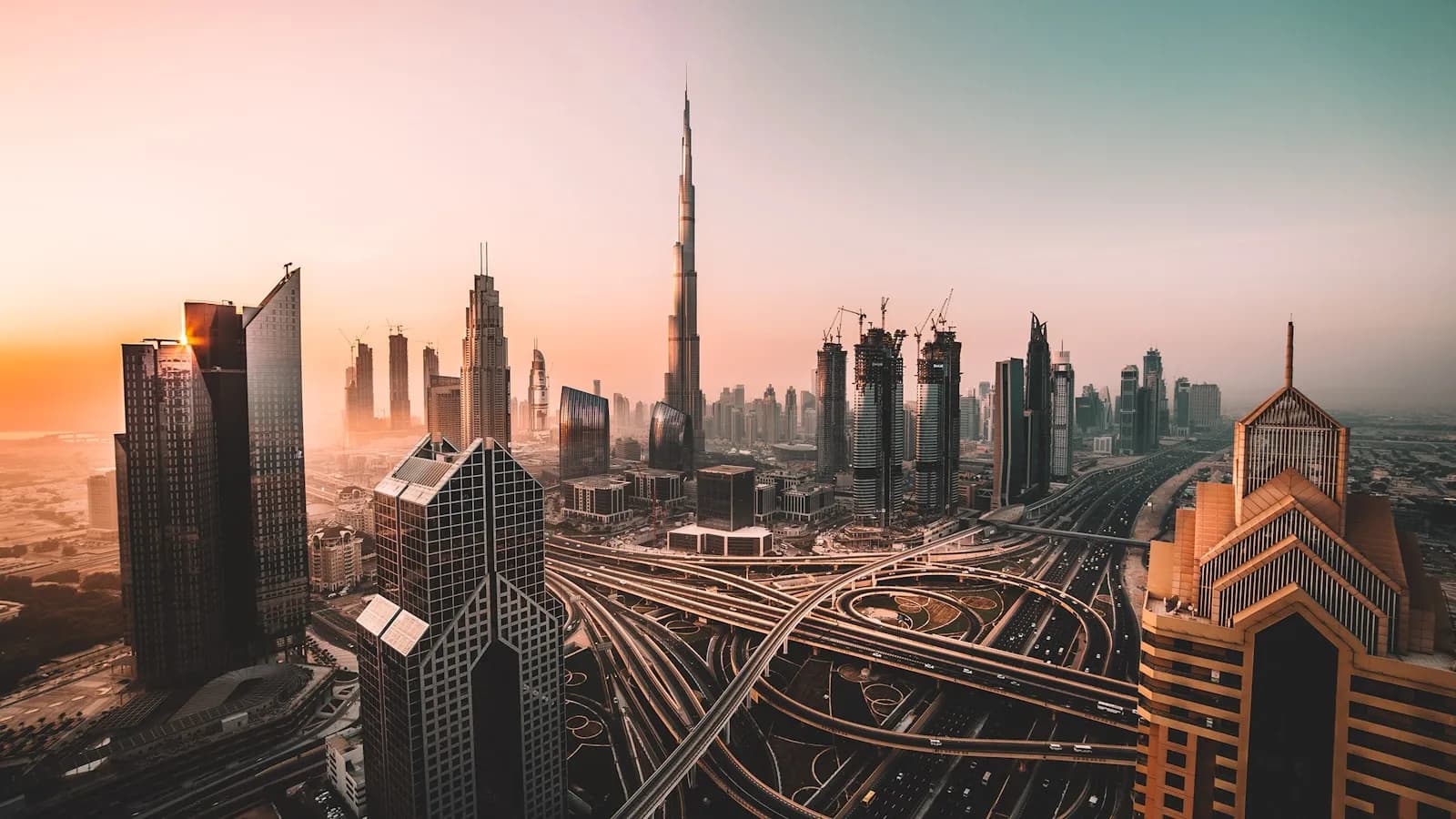
The Dubai Metro Blue Line opens in September 2029, but the property market has been moving since the route was announced in late 2023. Academic City rents up 43%, International City projected to gain 20-25%. Here's the off-plan opportunity right now.
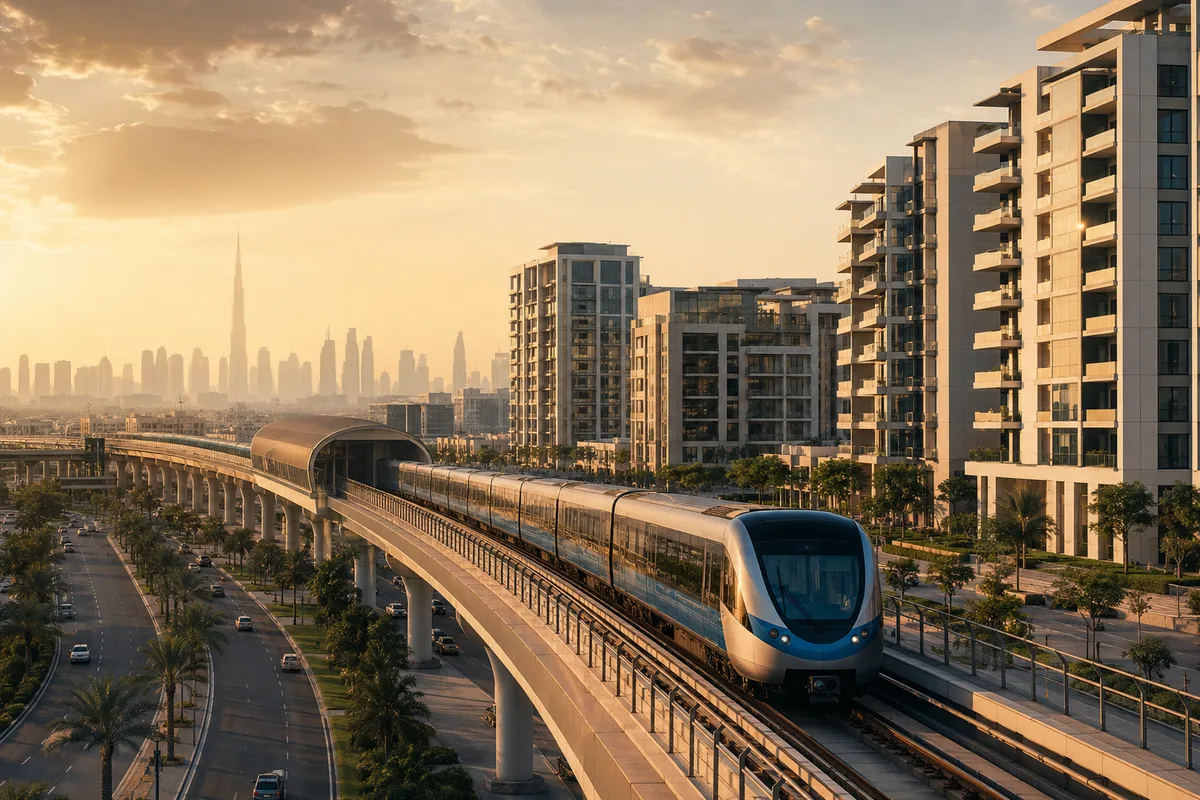
When the Roads and Transportation Authority (RTA) finally confirmed the route of the much-anticipated Blue Line in late 2023, the property market didn't sit back and wait to see the development. Academic City studio rents jumped 43% within the twelve months after the route was confirmed. While International City had been the fastest-growing secondary market in Dubai, the rate of growth far outpaced the estimates of most property agents. Furthermore, off-plan housing projects in Ras Al Khor, Dubai Silicon Oasis, and Dubai Creek Harbour started to trade at prices that were higher than those of similar developments two streets' worth of distance from the proposed metro route.
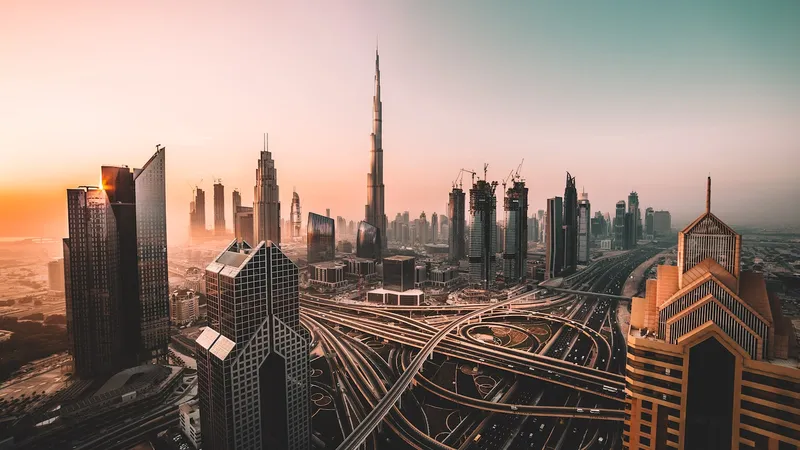
The Blue Line will extend the Dubai Metro system to 30 kilometres and will feature 14 stops. The entire metro system will officially open on 9 September 2029, marking two decades since the original Dubai Metro started running in 2009. For those who are considering purchasing property off-plan in Dubai and who are looking at investments along the new metro route, the question is no longer whether the metro will affect the values of properties along the route. Rather, the question is where the highest appreciation will be, what is the order of magnitude of the appreciation, and how investors can position themselves before the next round of price increases.
What the route actually looks like
The Blue Line consists of two branches that meet underground at International City 1 through a Y-junction, which is the only interchange of its kind on the network. Out of the 30 kilometres of total track, 15.5 kilometres are underground and 14.5 kilometres are elevated above the ground. Three stations sit inside International City, and a flagship 74-metre elevated stop at Dubai Creek Harbour will become the tallest metro station anywhere in the world when it opens.
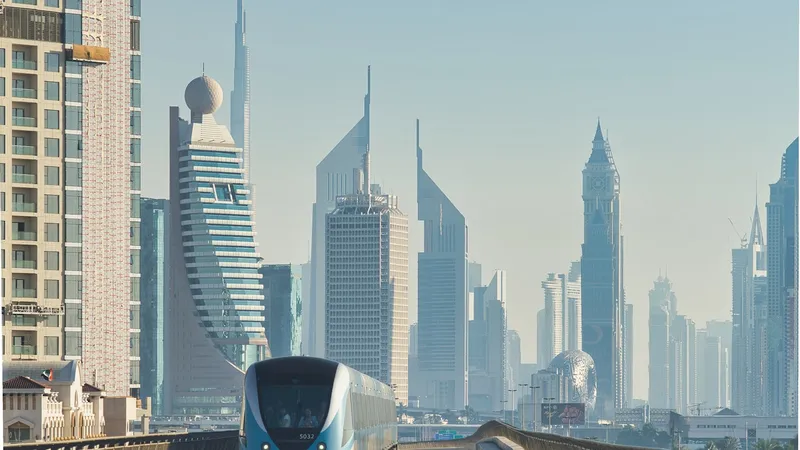
Walking outward from the existing metro network, the Blue Line connects to the Red Line at Centrepoint and to the Green Line at Creek. The main branch then runs through:
Dubai Festival City: connecting the established Festival City retail and residential cluster
Emaar Properties (Dubai Creek Harbour): the 74-metre flagship elevated station
Ras Al Khor: adjacent to the wildlife sanctuary and emerging residential plots
International City 1, 2, and 3: three stops inside one community, including the Y-junction interchange
Dubai Silicon Oasis: opposite Fakeeh University Hospital
Academic City: anchoring the student and university catchment
Al Ruwayyah 3 Depot: the line's eastern terminus and maintenance yard
A second branch heads out to Mirdif, Al Warqa, and the Mirdif Hills catchment. That station list reads as the answer to a fifteen-year-old gap in Dubai's metro coverage. The eastern and southeastern districts grew into substantial residential populations long ago, International City alone holds well over 100,000 residents, but until now nothing tied them to the rest of the city beyond buses and the road network. The Blue Line closes that gap, and the off-plan pricing along the route is already reflecting it.
Communities most likely to move
International City sits at the top of the list. RTA has publicly stated it expects property values along the corridor to gain 20-25% by the 2029 opening, and the three Blue Line stations sitting inside this community make it the single most concentrated beneficiary on the line. Apartments for sale in Dubai International City have always traded at the value end of the Dubai pricing structure, that doesn't shift pre-handover, but the rental yield case is already strengthening on the back of the metro proximity.
Dubai Silicon Oasis represents the second-tier story. The area has been quietly maturing for over a decade, with established residential stock, the tech free zone, and walkable retail. Dropping a metro station opposite Fakeeh University Hospital rewires the tenant pool. The existing demand from tech workers and the hospital catchment now gets reinforced by central-Dubai commuter demand from anyone working downtown but wanting somewhere quieter to live.
Academic City has shown the price reaction most clearly so far. Studio rents in the area jumped 43% in the twelve months after the route was announced, before construction even started. The reason for such a high appreciation is the fact that Academic City will become a 25-minute commute from Dubai's Downtown area once the metro is complete, instead of an hour-plus drive on the roads.
Dubai Creek Harbour sits at the premium end of the same thesis. Emaar's master plan was always going to mature into Dubai's next major waterfront cluster, the Creek Harbour station, combined with the existing pipeline and the planned tower stock, means buyers going off-plan now are positioning for both the master-plan completion arc and the metro-driven step-change in 2029.
Mirdif and Al Warqa round out the list. These have historically been low-density villa and townhouse areas priced for the family buyer, not the investor. However, with the construction of the metro, individuals in Dubai's main residential areas are starting to show an interest in purchasing residential property in these areas, which traditionally were not considered potential buyers due to the distance from the city.
What the Red Line precedent actually tells us
The most useful prediction tool here isn't a forecast, it's looking at what actually happened the last time Dubai opened a brand-new metro line. The Red Line started running in September 2009. Within five years of that opening:
Properties within a fifteen-minute walk of Red Line stations gained 43.8% on average
Properties within a five-to-ten-minute walk picked up closer to 40%
Dubai Marina booked 35.9%
JBR recorded 40.5%
Rental yields lifted 8% within a fifteen-minute walk, and 14% within five to ten minutes
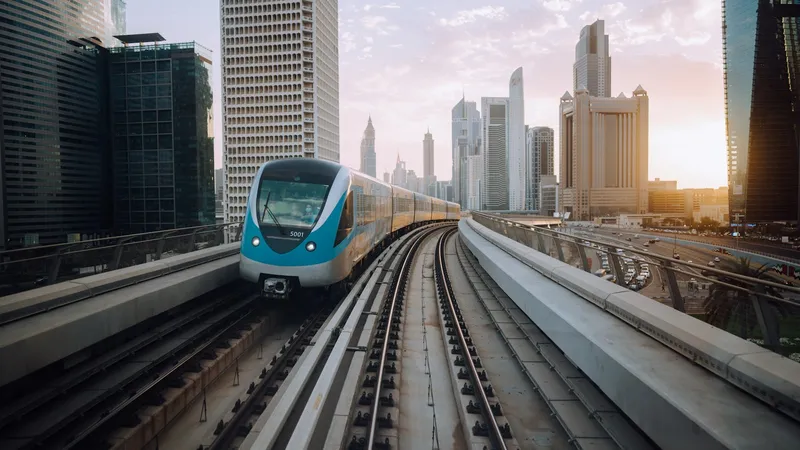
That's the precedent the Blue Line is being priced against, and it's why RTA's 20-25% projection for International City reads as conservative rather than bold.
There are, however, two things worth flagging honestly. First, the Red Line opened just as Dubai was climbing out of the 2008-2009 correction, so some of the appreciation reflected the broader cycle, not just the metro. Second, the Red Line corridor (Marina, JLT, Downtown) carried stronger pre-existing demand fundamentals than the Blue Line catchment areas like International City. So the percentage gains won't necessarily match one-for-one. But the direction is the same, and the magnitude lands in the same ballpark.
How to think about the entry point
The buying logic for off-plan investments along the Blue Line corridor breaks into three timing windows:
Now through 2027 (announcement-and-construction window): the long-hold investor case sits at its strongest. Off-plan projects in Dubai's Blue Line catchment are launching at pricing that hasn't fully baked in the metro premium yet.
2027 through 2029 (late-cycle entry): pricing reflects more of the expected uplift, but the metro opening itself usually produces a final visible step-up that runs six to twelve months after the trains start running.
Post-2029 (operating-yield window): once the trains are running, the appreciation case slows but rental yields stabilise at the new metro-adjacent level.
For most of the advisory work, the answer is straightforward. If you're buying for a ten-year hold or longer, the current window is the right one. If you're trading on a three-to-five year horizon, you're really betting on the construction-period markup, which tends to be more modest than the post-opening step-up.
What could shift the timeline
While the Roads and Transportation Authority has published the official opening date of the metro as 9 September 2029, the construction is still in its early phases. 10% of the construction was complete by November 2025, with a target of 30% by the end of 2026. The construction of the entire 30-kilometre metro system will take place between International City, Dubai Silicon Oasis, Academic City, Dubai Creek Harbour, Festival City, Ras Al Khor, Mirdif, and Al Warqa. However, the development of metro lines in Dubai has a reputation for being delayed by one to two quarters from the estimated dates of completion. Furthermore, the construction of the underground interchange at International City 1 will be the most complex construction site for the metro.
A six-month delay for the construction wouldn't fundamentally change the investment case. A two-year delay would, however, compress the construction-period appreciation window and push the price tier formation later. We're tracking the RTA's quarterly construction updates and flagging any material slippage to clients on our buyer list.
FAQ
Frequently asked questions
International City is the most concentrated beneficiary, with three Blue Line stations inside the community itself. Dubai Silicon Oasis, Academic City, Dubai Creek Harbour, Mirdif, and Al Warqa form the next tier. RTA has confirmed an expected 20-25% property value uplift in the directly-served areas by the 2029 opening.
The case is both yield-led and appreciation-led, which is unusual. International City already delivers 8-9% gross rental yields on furnished one-beds, and the metro proximity reinforces that yield while adding the structural appreciation case on top. The current pre-completion window is the strongest entry point for buyers in this segment.
Properties within a fifteen-minute walk of Red Line stations gained 43.8% on average over the five years that followed the opening. Dubai Marina gained 35.9%, JBR gained 40.5%. Rental values lifted 8-14% depending on walking distance.
The opening date is 9 September 2029, which marks the 20th anniversary of the original Dubai Metro launch. Construction reached 10% completion by November 2025 and is on track for 30% by the end of 2026. The full 30-kilometre, 14-station network spans International City, Dubai Silicon Oasis, Academic City, Dubai Creek Harbour, Festival City, Ras Al Khor, Mirdif, and Al Warqa.
Buying now captures both the construction-period appreciation and the post-opening step-up. Buying after the opening locks in a more predictable rental yield at the new metro-adjacent level, but misses the appreciation phase.
Yes, Al Ranim Properties currently tracks active off-plan launches in International City, Dubai Silicon Oasis, Dubai Creek Harbour, Ras Al Khor, and the broader Blue Line catchment. The shortlist covers apartments, branded residences, and a small run of villa products in the family-end catchment around Mirdif.
The Blue Line represents the single biggest infrastructure-driven property movement Dubai will see between now and 2030. It also happens to be the most legible one, the route has been published, the timeline is firm, the historical precedent from the Red Line gives the magnitude, and the current pricing in the catchment areas hasn't yet fully baked in the eventual uplift.
For buyers in our advisory workflow, the Blue Line corridor currently represents the highest-conviction segment of Dubai's Dubai communities map. Not because every project along the route is the right buy, selection still matters more than the line itself, but because the structural tailwind here is unusually clear and the entry window is still open right now.
Get a current Blue Line off-plan shortlist: If you want a per-station breakdown of the active inventory along the metro route with our advisory read on each project, speak to our team for a tailored shortlist.
Work with Al Ranim Properties
Found this useful? Talk to a consultant about your own situation.